
10 questions to ask before an aesthetic treatment
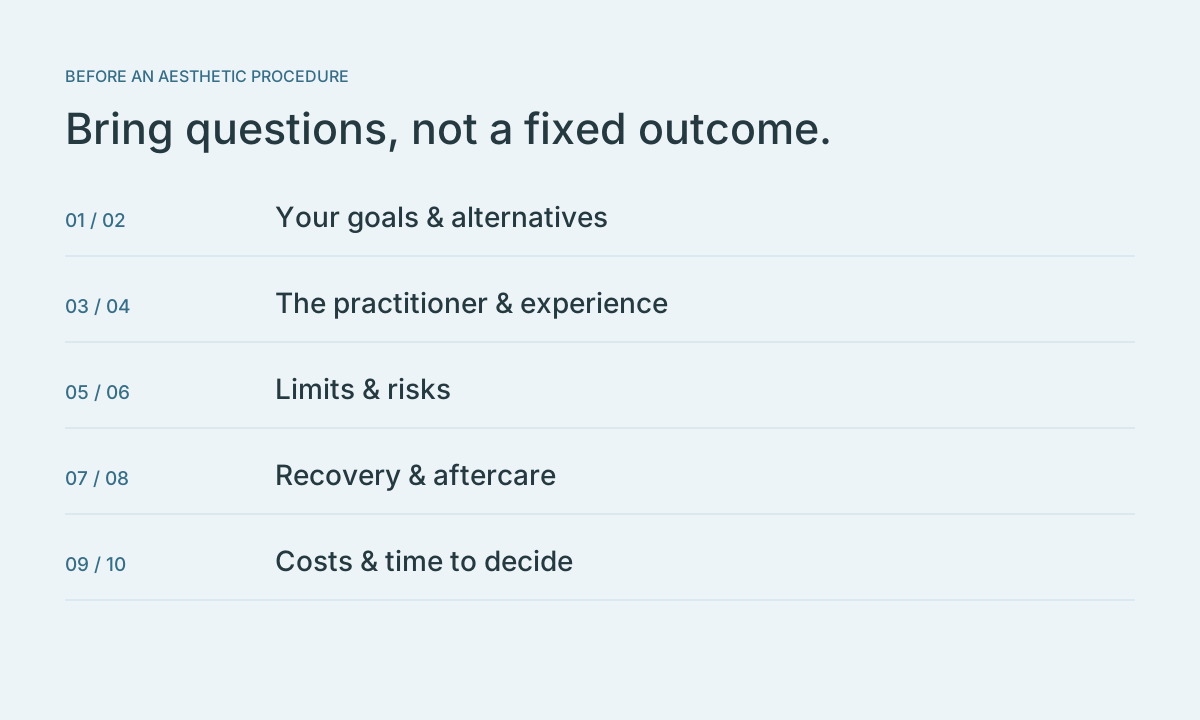
A useful consultation clarifies what you are deciding, rather than simply choosing an appealing image. These ten questions are arranged into five stages so you can use them during the conversation and review the answers afterwards. A simulation can express a preference; treatment questions require an individual clinical assessment.

1–2: Your goal and the alternatives
Describe the change in your own words before choosing a procedure name. Include what you want to preserve. If a simulation is used, ask the clinician to distinguish your visual preference from what may be achievable for you.
The AAD highlights benefits, risks and alternatives as consultation topics. Record the reasoning alongside your notes, so the discussion still makes sense without reopening the app.
- 1. What options address my concern, including waiting or not proceeding now?
- 2. What makes the proposed option appropriate or inappropriate for me?
Reference: American Academy of Dermatology: Questions before a cosmetic treatment
3–4: Who assesses you and who performs the procedure
The clinic’s name is not the same as the name of the person treating you. Record the assessor, practitioner and follow-up contact. If several people are involved, ask them to explain their roles.
NHS guidance recommends asking about qualifications and experience. Registration systems described by overseas sources are jurisdiction-specific; check through the relevant professional authority where you receive care.
- 3. Who will assess and treat me, and where can I verify their qualifications?
- 4. What is their experience with this work, and what limitations should I understand?
Reference: NHS: Choosing who will do your cosmetic procedure
5–6: Risks and what a simulation cannot show
A visually adjusted face does not display procedural risks, bodily response or the experience of recovery. Ask for a clear distinction between your preference, the illustration and the clinical limitations.
Instead of asking only whether an outcome can match an image, ask which aspects are useful for discussion and which should not be treated as a prediction. Record uncertainties rather than filling them in from the realism of the picture.
- 5. What important risks or limitations for me are not shown in this image?
- 6. What is a reasonable expectation, and what cannot be guaranteed?
7–8: Life after the appointment
Connect recovery questions with your actual work, travel and support arrangements. Get instructions for your own circumstances from the treating clinician, rather than using another person’s social post as a timetable.
A useful note has three parts: the activity you asked about, the clinician’s answer, and anything requiring clarification. This preserves individual guidance without turning it into advice for everyone.
- 7. How should I plan activities and recovery in my situation?
- 8. Who can I contact afterwards, and what is the process if a problem occurs?
9–10: The full cost and time to think
Request an understandable breakdown of what is included and when additional services could cost more. Compare the actual scope rather than using one promotional price as the total.
NHS decision guidance supports taking time without pressure from limited-time offers. Ask for information to review and prepare follow-up questions if you still do not understand an answer.
- 9. What does the quoted cost cover, and when could other charges arise?
- 10. How can I take the information away and consider it before deciding?
Reference: NHS: Is a cosmetic procedure right for me?
Separate explanations from expectations in your notes
Afterwards, make three columns: what the clinician explained, your understanding, and questions still open. Date any accompanying images and label each as an original, reference or simulation.
This is a conversation aid, not a treatment recommendation. If the explanations do not fit your goal or something remains unresolved, ask the assessor again before making a decision.
Sources
Visualization supports a consultation. It does not guarantee treatment outcomes. Assessment and advice remain the physician’s responsibility.